Thursday, 14 November 2013
It was a green and pleasant land.
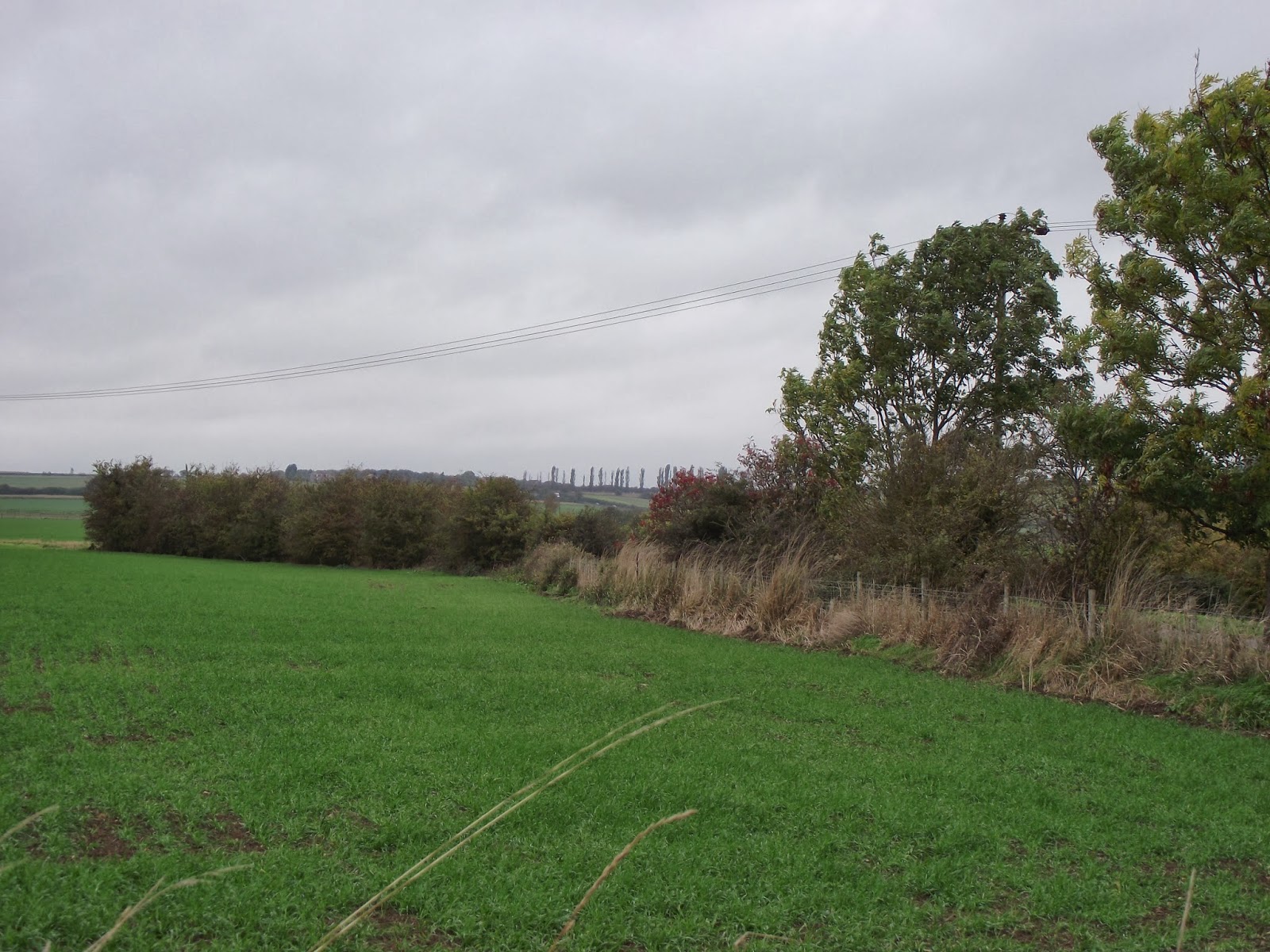
Once apon a time, before Sheppey's countryside became covered in huge housing estates, caravan parks and green energy farms, it was a green and pleasant land. I suppose it still is if you visit from some of the poorer areas of London but as somone who has lived here all of his 66 years the loss of countryside has been immense.
Countless small farms were still to be found and sheep were the predominant livestock, there were still pleasant and narrow lanes to be walked and perhaps, to some people's surprise, there were market gardens and many small orchards. One such pear orchard was still to be found along the Harty Road as recently as the 1970's, it stood alongside the last bend on the road before you turn to take the last few hundred yards drive down to the Ferry House Inn. Prior to that and close by, there had also been another small orchard between the church and Park Farm out there. It ran right down to the edge of the saltings alongside the Swale and it's site now, is still surrounded by the tall hedging that always was there to shelter the trees from the cold winds. Orchard Close along the Minster Road, is a small cul-de-sac that as it name implies, was built on the site of an old orchard.
Walking was another feature of my childhood, very few families that I knew had cars. When my father and I visited my grandparents in the Halfway, we always walked from Sheerness, we had neither a car or the bus fare. Likewise when my mother took us blackberrying in Minster, it was reached by a long walk along the sea front. The beauty of all that though was that you absorbed and stored away all manner of wildlife sightings and memories of the open countryside as you grew up, because of that it is now possible to make comparisons with how it once was and nowadays. The only comparisons that the youth of today will be able to make are between the insides of the various cars that their parents drove them around in.
I acquired my first bicycle when I was around 10 or 11, an old bone-shaker left by my uncle when he died. It was an embarrassment to be seen on and no match against my friends' posh Raleighs, but if nothing else it gave me the opportunity to get to Minster that much easier. Minster was an absolute paradise of open fields and hedgerows in those days, everything a young lad interested in collecting butterflies and bird's eggs, etc. would be interested in and I would have given my right arm to live there. One of my favourite walks then was that along the length of Oak Lane, a very narrow and quaint lane that must of been still unchanged from a hundred years before. It was bordered and boxed in by tall elm trees and hedgerows that made the lane seem even narrower and behind the hedgerows there were great meadows that ran for miles and down to the edge of the cliffs. Ah yes, and at the end of the lane, it abruptly ended at the cliff edge, indeed regularly collapsed down it, the great high cliffs that looked out into the Thames Estuary and the remains of the ex-WW2 Boom Defence running out into the sea. The cliffs that were very dangerous and where we were warned not to go to but we did because that made them more exciting. Large spinneys of silver birch, willow and morello cherry that had once grown along the cliff's edge before slipping downwards with erosion now blanketed the various levels of the cliff's downward track. In the sheer, sandy face of the topmost part of the cliffs Sand Martins nested in short tunnels that they dug into the soil each year on their return from wintering in South Africa.
Standing on the top of the cliffs as a youngster the challenge and excitement in trying to find a way down these cliffs to the beach below was irresistible and probably still is today, given the rescues that still take place. The first challenge was to get around and down past the sheer face at parts of the top of the cliff, sometimes we did it very dangerously by absailing down on old bits of rope that we found. Sometimes where the drop wasn't quite so sheer there were secret paths down that weren't quite as dangerous to fleet-footed youngsters. Below the sheer face of the cliff the surface then gradually tumbled down to the sea through all kinds of levels and hazards. There were the thickets, overgrown grassy areas and wet areas fed by springs from above and worst of all, the quicksand bogs that caught out most first-time youngster to the area. Stepping into these meant that the very least that happened was that you eventually struggled out without wellies if you was wearing them, the worst and most frequent incident saw you getting stuck up to your waist and needing to be rescued by the police or coastguards. I was lucky, my one time getting stuck there as a 12 yr old only saw me lose my wellies, although re-climbing the cliffs in bare feet wasn't that pleasant.
Most children of today aren't allowed to, or even want to, have such adventures but back then, in that green and pleasant land, it was our idea of fun, it was how we learnt about life - would love to do it all again.
Sunday, 3 November 2013
More About the Sheppey Light Railway
After my last post mentioning the Sheppey Light Railway, it stirred me to re-read the excellent little booklet by Peter A. Harding entitled "The Sheppey Light Railway".
From the booklet, I noted that preliminary discussions over the Line's route across Sheppey decided that the route would take it across the southern marshes of Sheppey from Queenborough to Leysdown, with few actual stations en-route. However at an Enquiry to discuss this that took place in Queenborough town hall in 1898, it was stated that the Line would now start at Queenborough and it's first stop would be at Sheerness East, a mile outside Sheerness along the Halfway Road. It would then travel through the middle of Sheppey before re-joining the originally planned route at Eastchurch.
This still didn't satisfy the Sheerness Chamber of Commerce and incredibly, they wanted the Line to start at a point near Sheerness Dockyard, not Queenborough, and then run through Sheerness High Street to the Halfway Road's Sheerness East station, before turning east for Leysdown. Imagine that, the railway line running down Sheerness High Street, how bizarre! The Light Railway Commissioners over-ruled that objection however and so in August 1901, the railway, with a top speed set at 25mph, was officially opened.
Stations were built at Sheerness East, East Minster, Minster-on-Sea, Eastchurch and Leysdown, with a few minor "halts" such as Harty Halt and other sidings featuring where necessary for farm trade. During the First World War, with the Royal Naval Air Station becoming established just below Eastchurch Station, a spur from the line was also run into the Air Station in order to benefit operations there.
That is just a brief look at how the railway came into being but I was tickled by one mention in the booklet that illustrates the sedate and rural nature of the Line. Apparently a local farmer was travelling on the Line back to his farm at Brambledown when, after stopping for the guard to close the gates after the train had crossed the Scrapsgate Road, it stopped again a hundred yards down the track. The farmer put his head out of the window and asked the guard (who was walking alongside the train) what the trouble was - "cow on the line" was the answer. The train continued but stopped again after another two hundred yards and once again the guard descended from the train. "Is it another cow" the farmer asked, "no" was the guard's reply, "it's the same one, caught us up and passed us" - priceless!
Yesterday morning, not long after dawn, I had the opportunity to have a chat on the reserve's seawall with a couple of the local wildfowlers - I haven't seen any out there for several weeks. Among several local wildlife issues that we discussed, the point paramount in their thoughts was how lacking in wildfowl the reserve was, it made their visits pretty pointless. Well, OK, so they had little to shoot at, but that fact aside, I had to agree with them, there is bugger all being seen on the reserve - and there should be. Standing on the sea wall this morning under blue and sunny skies, the reserve looked pretty damm good - a few hundred acres of prime grazing marsh, with it's ditches and rills gradually re-filling after recent rains and a mosaic of habitat types and yet so few waders and wildfowl. Just along The Swale, west of Harty Ferry, wildfowl are being seen in their thousands and yet we remain pretty much empty, it's so frustrating 6 days a week. Just last week there was a report of 2,000 Wigeon being seen leaving the reservoir at Mocketts, just behind the Ferry House Inn on Harty, but of course that's simply the result of daily loads of corn being spread round the water's edge in order that large numbers of the duck can be easily shot at regular intervals - the bad effect of inland duck shooting for you. Of course, if the rain continues to be as regular as it at the moment then presumably things will eventually change on the reserve and come the New Year we will get our couple of months of avian glory but till then it all looks good but looks aren't everything.
The three week mushroom bonanza on the reserve now looks like it is coming to and end and less and less new ones appear each day but they were good while they lasted. I'm down in Surrey at the girlfriend's again this coming weekend and so I'll have to re-visit the chestnut trees in Hawley Woods to continue my quest for autumn foods for free in the countryside.
From the booklet, I noted that preliminary discussions over the Line's route across Sheppey decided that the route would take it across the southern marshes of Sheppey from Queenborough to Leysdown, with few actual stations en-route. However at an Enquiry to discuss this that took place in Queenborough town hall in 1898, it was stated that the Line would now start at Queenborough and it's first stop would be at Sheerness East, a mile outside Sheerness along the Halfway Road. It would then travel through the middle of Sheppey before re-joining the originally planned route at Eastchurch.
This still didn't satisfy the Sheerness Chamber of Commerce and incredibly, they wanted the Line to start at a point near Sheerness Dockyard, not Queenborough, and then run through Sheerness High Street to the Halfway Road's Sheerness East station, before turning east for Leysdown. Imagine that, the railway line running down Sheerness High Street, how bizarre! The Light Railway Commissioners over-ruled that objection however and so in August 1901, the railway, with a top speed set at 25mph, was officially opened.
Stations were built at Sheerness East, East Minster, Minster-on-Sea, Eastchurch and Leysdown, with a few minor "halts" such as Harty Halt and other sidings featuring where necessary for farm trade. During the First World War, with the Royal Naval Air Station becoming established just below Eastchurch Station, a spur from the line was also run into the Air Station in order to benefit operations there.
That is just a brief look at how the railway came into being but I was tickled by one mention in the booklet that illustrates the sedate and rural nature of the Line. Apparently a local farmer was travelling on the Line back to his farm at Brambledown when, after stopping for the guard to close the gates after the train had crossed the Scrapsgate Road, it stopped again a hundred yards down the track. The farmer put his head out of the window and asked the guard (who was walking alongside the train) what the trouble was - "cow on the line" was the answer. The train continued but stopped again after another two hundred yards and once again the guard descended from the train. "Is it another cow" the farmer asked, "no" was the guard's reply, "it's the same one, caught us up and passed us" - priceless!
Yesterday morning, not long after dawn, I had the opportunity to have a chat on the reserve's seawall with a couple of the local wildfowlers - I haven't seen any out there for several weeks. Among several local wildlife issues that we discussed, the point paramount in their thoughts was how lacking in wildfowl the reserve was, it made their visits pretty pointless. Well, OK, so they had little to shoot at, but that fact aside, I had to agree with them, there is bugger all being seen on the reserve - and there should be. Standing on the sea wall this morning under blue and sunny skies, the reserve looked pretty damm good - a few hundred acres of prime grazing marsh, with it's ditches and rills gradually re-filling after recent rains and a mosaic of habitat types and yet so few waders and wildfowl. Just along The Swale, west of Harty Ferry, wildfowl are being seen in their thousands and yet we remain pretty much empty, it's so frustrating 6 days a week. Just last week there was a report of 2,000 Wigeon being seen leaving the reservoir at Mocketts, just behind the Ferry House Inn on Harty, but of course that's simply the result of daily loads of corn being spread round the water's edge in order that large numbers of the duck can be easily shot at regular intervals - the bad effect of inland duck shooting for you. Of course, if the rain continues to be as regular as it at the moment then presumably things will eventually change on the reserve and come the New Year we will get our couple of months of avian glory but till then it all looks good but looks aren't everything.
The three week mushroom bonanza on the reserve now looks like it is coming to and end and less and less new ones appear each day but they were good while they lasted. I'm down in Surrey at the girlfriend's again this coming weekend and so I'll have to re-visit the chestnut trees in Hawley Woods to continue my quest for autumn foods for free in the countryside.
Wednesday, 30 October 2013
Railway Gates
The gate pictured below is one along the reserve boundary, nothing special about it except that it used to be part of the Sheppey Light Railway line years ago.
It apparently came from Harty Halt, a small, short platform station, with a small hut as it's Waiting Room, that was situated just before the Harty Road turn off along the Leysdown Road.
All that remains to indicate where the station used to be is this short line of hedgerow running into the wheat field just before you turn off onto the Harty Road. You can see the direction that the railway line took by following the line of telegraph poles that make their way across the field back towards the now Eastchurch Prison, the poles closely followed the railway line for much of it's route across Sheppey.
Below, you can see another one of these identical railway gates, this time a few hundred yards past what would of been the Sheerness East station. It is still in it's original position along the road that leads to the Sheerness Golf Club and was a crossing point on the line between Danley Farm and Danley marshes below the golf club. The old bed of the railway line is immediately behind the gate and the crossing would probably of been used to move livestock between the farm and the marshes.
The Sheppey Light Railway closed in 1950 when I was just three years old, but apart from removing the tracks and sleepers the line was left as it always had been with its bed of stone chippings and fences and hedgerows. For the next ten years or so, as the line gradually began to re-colonise with all manner of wild flowers and shrubbery, it became quite a mecca for us youngsters who were interested in wildlife and were always out and about doing such things as collecting birds eggs. The section between the Scrapsgate Road in Minster and the Halfway Road is very overgrown these days but is still used as an unofficial shortcut to Sheerness, as it always has been, by those locals who know of it.
On the Harty Road, at Capel Farm this week, the rams have been put out to enjoy their brief annual sojourn with the ewes. Below you can see one of the rams in the middle of the flock with the harness round him that holds the coloured marker crayon in place on his lower chest so that each ewe that has been "served" can be identified. If rams have such a thing as pride it must be quite nice to look round the ever increasing number of coloured backsides and think, "mmm, not bad for an old ram".
Normally, after a week or so, the farmer will change the colour of the crayon so that he can see which sheep will start lambing first and gauge the expected lambing dates of the sheep. The traditional date that sheep farmers normally introduce the rams has always been November 5th but possibly this farmer has an eye on having the lambs ready for the spring market a tad earlier and perhaps having a better chance of a good price. Certainly, after some poor lamb sale years, this last two years have seen prices holding up very well and its surprising that this appears to be the last remaining serious flock of sheep on the whole of Sheppey, cattle have completely taken over as the livestock of choice.
It apparently came from Harty Halt, a small, short platform station, with a small hut as it's Waiting Room, that was situated just before the Harty Road turn off along the Leysdown Road.
All that remains to indicate where the station used to be is this short line of hedgerow running into the wheat field just before you turn off onto the Harty Road. You can see the direction that the railway line took by following the line of telegraph poles that make their way across the field back towards the now Eastchurch Prison, the poles closely followed the railway line for much of it's route across Sheppey.
Below, you can see another one of these identical railway gates, this time a few hundred yards past what would of been the Sheerness East station. It is still in it's original position along the road that leads to the Sheerness Golf Club and was a crossing point on the line between Danley Farm and Danley marshes below the golf club. The old bed of the railway line is immediately behind the gate and the crossing would probably of been used to move livestock between the farm and the marshes.
The Sheppey Light Railway closed in 1950 when I was just three years old, but apart from removing the tracks and sleepers the line was left as it always had been with its bed of stone chippings and fences and hedgerows. For the next ten years or so, as the line gradually began to re-colonise with all manner of wild flowers and shrubbery, it became quite a mecca for us youngsters who were interested in wildlife and were always out and about doing such things as collecting birds eggs. The section between the Scrapsgate Road in Minster and the Halfway Road is very overgrown these days but is still used as an unofficial shortcut to Sheerness, as it always has been, by those locals who know of it.
On the Harty Road, at Capel Farm this week, the rams have been put out to enjoy their brief annual sojourn with the ewes. Below you can see one of the rams in the middle of the flock with the harness round him that holds the coloured marker crayon in place on his lower chest so that each ewe that has been "served" can be identified. If rams have such a thing as pride it must be quite nice to look round the ever increasing number of coloured backsides and think, "mmm, not bad for an old ram".
Normally, after a week or so, the farmer will change the colour of the crayon so that he can see which sheep will start lambing first and gauge the expected lambing dates of the sheep. The traditional date that sheep farmers normally introduce the rams has always been November 5th but possibly this farmer has an eye on having the lambs ready for the spring market a tad earlier and perhaps having a better chance of a good price. Certainly, after some poor lamb sale years, this last two years have seen prices holding up very well and its surprising that this appears to be the last remaining serious flock of sheep on the whole of Sheppey, cattle have completely taken over as the livestock of choice.
Tuesday, 22 October 2013
How warm it is
The weather remains incredibly warm at the moment, even when its cloudy and rainy, although Sheppey seems to have had a lot less rain than other areas in Kent. Walking round the reserve is certainly an enjoyable experience at the moment, rather than being in cold winds, but as a gardener, a nice hard frost would be lovely, if only to slow down the still fast growing lawns.
The first Harrier Roost Count took place on Sunday evening, unfortunately because it was the result of being postponed from the previous Sunday, I was unavailable due to being in Surrey, spending some time in the heathland and woods of Hawley Woods, as per below.
Getting back to the Roost Count, I haven't seen the various count totals yet but do know that the guy who counts the harriers going in to roost in the extensive reed beds along Capel Fleet eastwards from the Raptor Viewing Mound, had a nil count. This was not because Marsh Harriers weren't around but because they were regularly disturbed from attempting to roost by duck shooters shooting along the same reed beds. I say "duck shooters" and not wildfowlers, because there is a world of difference between these pampered guys and the true wildfowlers who experience the extreme conditions of the mudflats and saltings of the estuaries.
The fact that the duck shooters still shoot and disturb the Capel Fleet reed beds is a bit of a joke really when one considers that the whole of Capel Fleet is covered by SSSI status, but I have been told in the past that where such things were taking place before classification then they can't be stopped!! To be honest there have also been odd occasions in recent years where a digger has been used to create small pools in or close to the reed beds as well, but when I've mentioned it to Natural England they've always accepted the land owner's explanation that it was reed bed improvement work. The fact that corn then gets regularly thrown into these pools to attract ducks and that men with guns just happen to hide around these pools on a Sunday night, seems to have passed NE by.
Having said all that, I saw the reserve's first Hen Harrier of this autumn this morning, a ringtail and a really welcome sight.
One of the reserve's, years old ditch crossing planks, is starting to show it's age now and part rotting. It's been there for much longer than the 28 years that I've been wandering around there and I still use it most weeks. When you've walked the length of one long field on the marsh and there is a ditch between that field and the next one these planks are invaluable to avoid having to retrace your steps. In the old days when livestock "lookers" still walked around the fields rather than as now, using quad bikes, these planks would of been a vital part of the marsh infrastructure, sadly few get replaced these days.
I should also add that in a normal winter the water level in that ditch will normally be close to touching that plank and in a wet one, the plank will be submerged, so we have some way to go yet.
And at the same time as walking round checking on the livestock the "looker" would also have time to notice all manner of wildlife events going on around him as the seasons changed. One such event would the autumn arrival of field mushrooms, ripe and free for the picking. I photographed these yesterday morning before taking them home for my dinner and boy were they delicious to eat, a few more tonight in an ommlette is on the cards, topped off with a large glass of good Pinot Noir, me thinks .
So far this year I've made two litres of Slow Gin, ate some blackberries and now the mushrooms, all from the countryside, I'm now pondering over the use of rose hips.
The first Harrier Roost Count took place on Sunday evening, unfortunately because it was the result of being postponed from the previous Sunday, I was unavailable due to being in Surrey, spending some time in the heathland and woods of Hawley Woods, as per below.
Getting back to the Roost Count, I haven't seen the various count totals yet but do know that the guy who counts the harriers going in to roost in the extensive reed beds along Capel Fleet eastwards from the Raptor Viewing Mound, had a nil count. This was not because Marsh Harriers weren't around but because they were regularly disturbed from attempting to roost by duck shooters shooting along the same reed beds. I say "duck shooters" and not wildfowlers, because there is a world of difference between these pampered guys and the true wildfowlers who experience the extreme conditions of the mudflats and saltings of the estuaries.
The fact that the duck shooters still shoot and disturb the Capel Fleet reed beds is a bit of a joke really when one considers that the whole of Capel Fleet is covered by SSSI status, but I have been told in the past that where such things were taking place before classification then they can't be stopped!! To be honest there have also been odd occasions in recent years where a digger has been used to create small pools in or close to the reed beds as well, but when I've mentioned it to Natural England they've always accepted the land owner's explanation that it was reed bed improvement work. The fact that corn then gets regularly thrown into these pools to attract ducks and that men with guns just happen to hide around these pools on a Sunday night, seems to have passed NE by.
Having said all that, I saw the reserve's first Hen Harrier of this autumn this morning, a ringtail and a really welcome sight.
One of the reserve's, years old ditch crossing planks, is starting to show it's age now and part rotting. It's been there for much longer than the 28 years that I've been wandering around there and I still use it most weeks. When you've walked the length of one long field on the marsh and there is a ditch between that field and the next one these planks are invaluable to avoid having to retrace your steps. In the old days when livestock "lookers" still walked around the fields rather than as now, using quad bikes, these planks would of been a vital part of the marsh infrastructure, sadly few get replaced these days.
I should also add that in a normal winter the water level in that ditch will normally be close to touching that plank and in a wet one, the plank will be submerged, so we have some way to go yet.
And at the same time as walking round checking on the livestock the "looker" would also have time to notice all manner of wildlife events going on around him as the seasons changed. One such event would the autumn arrival of field mushrooms, ripe and free for the picking. I photographed these yesterday morning before taking them home for my dinner and boy were they delicious to eat, a few more tonight in an ommlette is on the cards, topped off with a large glass of good Pinot Noir, me thinks .
So far this year I've made two litres of Slow Gin, ate some blackberries and now the mushrooms, all from the countryside, I'm now pondering over the use of rose hips.
Monday, 14 October 2013
More rain needed
After last Friday's 16 hour monsoon and then more rain yesterday, I was hoping to see a decrease in the dry conditions on the reserve when I visited there this morning. Well there was quite a bit of mud and some puddles along the paths and even a few puddles in some of the rills that weren't there before, but we're still a long way from having expanses of water attractive to ducks and waders.
However, having said all that, the large splash in the "Flood Field" had miraculously achieved a shallow covering of water over 75% of its width. The photo makes it look far better than it actually was, it's only an inch or two deep, but it's an encouraging start.
There are two arable fields along the Harty Road, not far past Capel Corner, that habitually have large splashes of water on their surfaces in wet winters, last winter was particularly bad and a lot of the young rape plants simply rotted in them. Presumably in order to try and prevent this happening in future the landowner is currently deepening the ditches surrounding the fields and attempting to lay mole-drain piping across them, but I still feel that he is missing the point and wasting his money.
Now I'm no agricultural expert but I can't see how digging the ditches much deeper is going to prevent the water from laying on the surface, it's sitting there because after many years of non-ploughing and compaction from heavy plant a hard, compacted crust has formed making it almost impermeable. Even in gardens, anybody who works clay soil knows that it soil particles stick to each other like glue and that it regularly needs to be deep dug and exposed to the elements. I feel sure that if the farmer there was to actually plough the fields every 2-3 years and break up that crust, then the water would drain away far easier and he would avoid having to do what he is now is.
I was surprised to see the main headline of The Telegraph today boldly stating "Fox-hunting ban to be relaxed". Well as readers of this blog will know, people like myself, who visit Harty most days, have never seen any evidence that a hunting ban was actually in force anyway. The Hunt still visit on a regular basis, normally fox-hunting in the traditional way and we also get occasional visits from a Beagle pack that pursues the hares. Personally, I think that traditional fox-hunting still goes on a lot more than people think around the country and that the hunts simply make out that their really aggrieved by the "ban" just to pull the wool over the anti's eyes and to make them smugly feel that they've won some kind of victory. In that way every body's happy.
Despite my support for most traditional country ways and the fact that both the huntsmen and women and their hounds make a very picturesque sight in full flow, I don't buy into their usual claim that they are an effective form of fox control, I prefer and support other methods. Farmers in today's article (possibly hunt supporters) were claiming that a lot of lambs were lost last winter to hungry foxes and that they badly need the hunts back to control them, one reason for the potential easing of the ban apparently. Now the hunt may kill the odd fox or two during a day's hunting but the unnecessary disturbance that they can create to other wildlife during the course of it can be quite great. I watched the hunt on Harty a few weeks ago, working the pack of hounds through the wide reed beds of Capel Fleet and out were flying Marsh Harriers, Coots, Snipe and assorted ducks.
Send a guy in a 4x4 with long range spotlights and a high-powered rifle out at night onto farmland and he will almost certainly cull just as many foxes, or more, instantly and with the minimum of disturbance. That is serious and sensible fox controls by quiet and modest guys who are rarely seen and who don't need to gallop about noisily in a red coat to prove a point.
And finally, Midge the older dog seems convinced that there's something still down that hole but Ellie seems to be saying "nah, it looks better over there".
However, having said all that, the large splash in the "Flood Field" had miraculously achieved a shallow covering of water over 75% of its width. The photo makes it look far better than it actually was, it's only an inch or two deep, but it's an encouraging start.
There are two arable fields along the Harty Road, not far past Capel Corner, that habitually have large splashes of water on their surfaces in wet winters, last winter was particularly bad and a lot of the young rape plants simply rotted in them. Presumably in order to try and prevent this happening in future the landowner is currently deepening the ditches surrounding the fields and attempting to lay mole-drain piping across them, but I still feel that he is missing the point and wasting his money.
Now I'm no agricultural expert but I can't see how digging the ditches much deeper is going to prevent the water from laying on the surface, it's sitting there because after many years of non-ploughing and compaction from heavy plant a hard, compacted crust has formed making it almost impermeable. Even in gardens, anybody who works clay soil knows that it soil particles stick to each other like glue and that it regularly needs to be deep dug and exposed to the elements. I feel sure that if the farmer there was to actually plough the fields every 2-3 years and break up that crust, then the water would drain away far easier and he would avoid having to do what he is now is.
I was surprised to see the main headline of The Telegraph today boldly stating "Fox-hunting ban to be relaxed". Well as readers of this blog will know, people like myself, who visit Harty most days, have never seen any evidence that a hunting ban was actually in force anyway. The Hunt still visit on a regular basis, normally fox-hunting in the traditional way and we also get occasional visits from a Beagle pack that pursues the hares. Personally, I think that traditional fox-hunting still goes on a lot more than people think around the country and that the hunts simply make out that their really aggrieved by the "ban" just to pull the wool over the anti's eyes and to make them smugly feel that they've won some kind of victory. In that way every body's happy.
Despite my support for most traditional country ways and the fact that both the huntsmen and women and their hounds make a very picturesque sight in full flow, I don't buy into their usual claim that they are an effective form of fox control, I prefer and support other methods. Farmers in today's article (possibly hunt supporters) were claiming that a lot of lambs were lost last winter to hungry foxes and that they badly need the hunts back to control them, one reason for the potential easing of the ban apparently. Now the hunt may kill the odd fox or two during a day's hunting but the unnecessary disturbance that they can create to other wildlife during the course of it can be quite great. I watched the hunt on Harty a few weeks ago, working the pack of hounds through the wide reed beds of Capel Fleet and out were flying Marsh Harriers, Coots, Snipe and assorted ducks.
Send a guy in a 4x4 with long range spotlights and a high-powered rifle out at night onto farmland and he will almost certainly cull just as many foxes, or more, instantly and with the minimum of disturbance. That is serious and sensible fox controls by quiet and modest guys who are rarely seen and who don't need to gallop about noisily in a red coat to prove a point.
And finally, Midge the older dog seems convinced that there's something still down that hole but Ellie seems to be saying "nah, it looks better over there".
Friday, 4 October 2013
Footpaths and Food for Free
The two farmers that own and farm most of Harty, have in recent years done quite a bit towards improving the habitat out there both for wildlife and the public that enjoys watching it, but every now and then old habits creep back out.
At "Capel Corner" along the Harty Road the faded sign shown below points to a Bridleway/Public Footpath that runs from the Harty Road and across the farm land to Harty Hill in the distance.
The sign stands alongside the gate below, which is where the Bridleway begins, unfortunately however, it has been rendered inaccessible to the public due to the gate pictured below.
Not only is the gate chained and padlocked but it also has on it the warning sign shown below (there are in fact several bulls within yards of the gate). And then, for good measure, between the two wooden posts is stretched electric fencing which goes all round the bulls to keep them in. I think that it's safe to say that that Public Way is most definitely not open to the public at the moment!
Not far from there, alongside the footpath that runs from Elliotts Farm across to Muswell Manor, there are a short stretch of oak trees that currently form a loose hedge around 20ft high. They were beginning to impinge on the concrete track alongside and a degree of light trimming was possibly in order but of course, as many of us have witnessed in the countryside, farmers these days don't do light hedge trimming. The tractor-driven flail has been out and most of the bushes have been cut so severely that they have been left simply as one-sided bushes. An appalling illustration of how to vandalise the countryside without any comeback.
Moving away from such mayhem and depression, yesterday my partner and I were out in the Sheppey countryside picking sloes and despite what seems like a shortage of them this year, we managed to pick 4lb of them and below you can say me carrying the proof.
As they are every year, they will be used for making this winter's Sloe Gin, a real treat in a few months time after a bitter cold day out on the marsh. This year though, while I will be making a couple of bottles to my usual recipe, Diane will be trying a different one and we look forward to comparing flavours one cold winter's night when we're tucked up indoors. We had locally foraged blackberry and apple pie yesterday and the next thing I'll be looking for this week is the emergence of field mushrooms after rain yesterday and warm temperatures forecast for the next few days. All these things taste so much better when they've come free from the countryside and you've enjoyed fun picking them.
At "Capel Corner" along the Harty Road the faded sign shown below points to a Bridleway/Public Footpath that runs from the Harty Road and across the farm land to Harty Hill in the distance.
The sign stands alongside the gate below, which is where the Bridleway begins, unfortunately however, it has been rendered inaccessible to the public due to the gate pictured below.
Not only is the gate chained and padlocked but it also has on it the warning sign shown below (there are in fact several bulls within yards of the gate). And then, for good measure, between the two wooden posts is stretched electric fencing which goes all round the bulls to keep them in. I think that it's safe to say that that Public Way is most definitely not open to the public at the moment!
Not far from there, alongside the footpath that runs from Elliotts Farm across to Muswell Manor, there are a short stretch of oak trees that currently form a loose hedge around 20ft high. They were beginning to impinge on the concrete track alongside and a degree of light trimming was possibly in order but of course, as many of us have witnessed in the countryside, farmers these days don't do light hedge trimming. The tractor-driven flail has been out and most of the bushes have been cut so severely that they have been left simply as one-sided bushes. An appalling illustration of how to vandalise the countryside without any comeback.
Moving away from such mayhem and depression, yesterday my partner and I were out in the Sheppey countryside picking sloes and despite what seems like a shortage of them this year, we managed to pick 4lb of them and below you can say me carrying the proof.
As they are every year, they will be used for making this winter's Sloe Gin, a real treat in a few months time after a bitter cold day out on the marsh. This year though, while I will be making a couple of bottles to my usual recipe, Diane will be trying a different one and we look forward to comparing flavours one cold winter's night when we're tucked up indoors. We had locally foraged blackberry and apple pie yesterday and the next thing I'll be looking for this week is the emergence of field mushrooms after rain yesterday and warm temperatures forecast for the next few days. All these things taste so much better when they've come free from the countryside and you've enjoyed fun picking them.
Saturday, 28 September 2013
Barge at Dawn
As many people will know who wander about in the countryside on a regular basis, many days are the same as each other, can be bloody boring in fact, but now and again along comes one that stands out, that strikes a chord somewhere within. It could be the first swallow in Spring, or the dawn sun sparkling on overnight snow, but for me this morning, it was a sailing barge making it's way out of The Swale as dawn broke across the estuary.
At first there was not a sound as ghost-like, the barge made it's silent way towards the open sea round Shellness Point but as the first tip of the sun rose from behind Reculver, so the birds woke up. A curlew called, followed by another and another, a curlew chorus orchestrated the stillness of the dawn, playing farewell to the barge and it's crew.
And as the sun rose quickly into the dawn sky, a breath of easterly breeze stirred my face and Skylarks began to sing, dawn became morning and the moment was lost, but what a moment it had been.
Unfortunately, the rest of the walk around the reserve was just as it has been now for some weeks, pretty boring. Recent rains and heavy dews have certainly got the grass growing again and it's all looking much greener but water levels remain low or non-existent and hence bird numbers can be pretty much recorded on one hand at times. The other morning along the "S Bend Ditch", normally the best spot on the reserve, I counted 9 Teal, 2 Snipe, 1 Green Sandpiper and 12 Mallard, from experience it'll be after New Year before things pick up again.
Mind you, the weather has got the arable crops across Harty off to a much better start this year. Last autumn it went very wet almost overnight and many fields couldn't be sown with corn and young rape rotted soon after germinating. This year, as the photo below shows, the winter wheat is already off to a flying start, farmers might even be happy.
Over the last couple of weeks my garden pond has had regular daily visits from this Heron, fishing for the goldfish therein. The pond is quite large and is home to a good number of both newts and frogs, which was it's original reason for being put there, but many years ago four goldfish were put in there, a huge mistake! They have since multiplied to many, many dozens of all sizes and act like piranhas when it comes to snapping up newly hatched tadpoles each Spring. I now have to rear the tadpoles in a different place in the garden each year - the Heron is a welcome visitor, it's welcome to every goldfish that it snaps up.
Lastly, while sitting at the computer in my study the other morning, this snail began to make it's way up the outside of the window in front of me. It was quite fascinating to watch it's slow progress to the top and I then wondered, do they have the ability to turn off their suction powers and so simply drop back to the earth below, or do they have to make a slow return journey the same way that they came.
At first there was not a sound as ghost-like, the barge made it's silent way towards the open sea round Shellness Point but as the first tip of the sun rose from behind Reculver, so the birds woke up. A curlew called, followed by another and another, a curlew chorus orchestrated the stillness of the dawn, playing farewell to the barge and it's crew.
And as the sun rose quickly into the dawn sky, a breath of easterly breeze stirred my face and Skylarks began to sing, dawn became morning and the moment was lost, but what a moment it had been.
Unfortunately, the rest of the walk around the reserve was just as it has been now for some weeks, pretty boring. Recent rains and heavy dews have certainly got the grass growing again and it's all looking much greener but water levels remain low or non-existent and hence bird numbers can be pretty much recorded on one hand at times. The other morning along the "S Bend Ditch", normally the best spot on the reserve, I counted 9 Teal, 2 Snipe, 1 Green Sandpiper and 12 Mallard, from experience it'll be after New Year before things pick up again.
Mind you, the weather has got the arable crops across Harty off to a much better start this year. Last autumn it went very wet almost overnight and many fields couldn't be sown with corn and young rape rotted soon after germinating. This year, as the photo below shows, the winter wheat is already off to a flying start, farmers might even be happy.
Over the last couple of weeks my garden pond has had regular daily visits from this Heron, fishing for the goldfish therein. The pond is quite large and is home to a good number of both newts and frogs, which was it's original reason for being put there, but many years ago four goldfish were put in there, a huge mistake! They have since multiplied to many, many dozens of all sizes and act like piranhas when it comes to snapping up newly hatched tadpoles each Spring. I now have to rear the tadpoles in a different place in the garden each year - the Heron is a welcome visitor, it's welcome to every goldfish that it snaps up.
Lastly, while sitting at the computer in my study the other morning, this snail began to make it's way up the outside of the window in front of me. It was quite fascinating to watch it's slow progress to the top and I then wondered, do they have the ability to turn off their suction powers and so simply drop back to the earth below, or do they have to make a slow return journey the same way that they came.
Subscribe to:
Posts (Atom)