Monday, 31 January 2011

A Stillness in the Air

With some trepidation yesterday morning I arrived at Leysdown having agreed to Lead a Kent Ornithological Society Field meeting, firstly to Shellness Point and then round The Swale NNR. It was a bitter cold and windy morning and the prospect of several hours freezing to death, and being out of my depth doing something I'd never done before, was quite daunting. In the event, the wind dropped, the sun put in an appearance and our 8 member party had a thoroughly good time and at Shellness Point we were even temporarily joined by a large party from the South Bucks Bird Club.

The High Tide Roost at the Point was unfortunately a bit of a damp squib because the high tide was of the lower height variety and by failing to cover much of the inner mudflats it allowed the few thousand waders to remain spread out along their length into the distance. However spirits were raised as we watched a distant speck in the sky out to sea gradually morph into a Peregrine Falcon that eventually dive-bombed some waders almost alongside us before disappearing along the tide-line again. A Merlin also put in an appearance, using an old lorry tyre way out in the saltings as a perch.
Leaving there we made our way along the seawall to the main part of The Swale NNR, and along the wall, I reckon the best bird of the day got up out of the grass just yards from us, a Short-eared Owl. A cracking sight and very soon after we stopped to get some equally good views of a flock of around 160 White-fronted Geese that were feeding in a grazing meadow alongside the seawall. Eventually scared up by an approaching helicopter they flew a circle around us, filling the air with my favourite wild goose calls.
The marsh part of the reserve was fairly quiet birdwise but we did at least catch up with several Marsh Harriers that until then had been reluctant to put in an appearance.
This is a bit of a wizz through a wander round that lasted almost six hours but I'm sure that the participants found much to enjoy.

I was back on the reserve with Midge earlier on today and with little wind and the sun beginning to break out through patches in the cloud it was a really pleasant patrol. What was very quickly apparent was a feeling that something had changed, and for the better. After a few drying and windy days the surface of the marsh was dryer and firmer and almost seemed greener, the sun was out and couple that with an overpowering stillness in the air, you could feel that Spring was very, very close. There were other little signs as well, a few indivdual pairs of Greylags had broken away from the main flock and were looking like prospective breeding pairs and even better, one or two Lapwings were practising their courtship displays with much "peewitting". Yes there was definitely a whiff of Spring out there this morning and just think, many of the Spring migrants will have already left their wintering grounds and be starting the migration north, not long now before that first Sand Martin turns up over a pond or waterway.
I wonder if the Hooded Crow was thinking the same this morning as it made its way out onto the saltings with a flock of 120 Carrion Crows, was he thinking of Scotland once again, he looked quite dapper in his two-tone plumage.

Yes, there's been a stillness in the air today that suggested that we were almost at the crossroads of the seasons.

THE BARN EARLIER TODAY JUST BEFORE THE SUN BROKE ABOVE THE HORIZON


THE RAPTOR VIEWING MOUND ALONG THE HARTY ROAD


HARTY HILL FROM THE HARTY ROAD


CAPEL CORNER WITH CAPEL FLEET IN THE BACKGROUND

Tuesday, 25 January 2011

The Little Lad in Me

"When I was a windy boy and a bit" is the opening line to Dylan Thomas's poem "Lament" and it regularly re-occurs in my mind for some reason and inevitably makes me think back to my childhood.

My early childhood was spent in a narrow group of terraced streets in Sheerness where the sky was only seen above the tall, hemmed-in roofs of the houses and for fun we raced lolly sticks down the raging, rainy gutters, or so I remember them.


But as I grew from a little child into a bigger child of around ten or eleven, I began to explore further away from home. One day, having wandered through the width of three more streets and alleys, I suddenly, like The Mole emerging from his Spring-cleaning, burst apon the grassy banks of the stretch of water that bordered all of Sheerness, known as The Canal and The Boating Lake. Suddenly to my childish eyes I was confronted both there and beyond, with this whole, wide world known as The Countryside and what a wide world it was.

The narrow Halfway Road wound its way into the distance and was bordered on both sides by water-voled ditches, allotments, pig sheds and above all else, great wide grazing marshes. Marshes that contained sheep and cattle, ducks, skylarks and hawks that hung in the air - and I was hooked. Gradually I began to make regular incursions further and further up the road, entranced by the road-side ditches bursting, or so it seemed, with water voles and moorhens. Then, as I became more daring, I began to venture out into the marshes themselves, fear over-ridden by an intense curiosity in what Nature had in store to be found. And the first of these was a plank that crossed a ditch in the middle of one of the fields and throughout that Spring I spent hours laying flat along that plank, nose almost touching the water, watching every movement of the things below the water. Sticklebacks, Water Beetles, tadpoles, frogs, and great swarms of Water Fleas. I think I spent as much time in the library trying to identify these things as I did laying on the plank but I was encaptured, and still are, by anything to do with water.

Exploring still further afield I came across the council's sewerage works on the edge of the marsh. Great round and open-topped beds full to overflowing with fermenting effluence, continually sprinkled with water by rotating arms and all un-fenced and open to the curiosity of a young child such as I. This was indeed a fascinating place and worthy of many visits and during the summer months many dozens of self-sown tomato plants grew around the site (think about it) and it was great to be able to pop warm, juicy tomatos into my mouth as I walked by, a rare treat in those days.


Gradually, with every visit to my little solitary world, more and more specimens got taken back home for observation. An old stone sink with the plughole blocked up was my pond full of tadpoles, where I was fascinated to actually watch these grow into miniature frogs. Sweet jars, with top covers of old pieces of net curtain, were packed with stinging nettles and caterpillars and I watched as these eventually turned into chrysalis's and then beautiful Small Tortoiseshell butterflies.

I imagine that these days it would be almost impossible for a lad of that age to be able to self-educate himself in the ways of nature in such a way, times and parents have changed and its an almighty shame.

"Now as I was young and easy under the apples boughs
About the lilting house and happy as the grass was green,
The night above the dingle starry,
Time let me hail and climb
Golden in the heydays of his eyes".................Dylan Thomas.

Monday, 24 January 2011

The Little Shooter

Since my last posting and the reference to the young lad who was accompanying his father wildfowling I have been taken to task for suggesting that he might be learning something useful. To be honest, I thought that it was a quite reasonable statement to make but I guess because I have always been so fiecely critical of the wildfowlers there, it wasn't what people would expect me to say.

Let me try and explain.
I have never totally condemmed all forms of shooting, just those alongside nature reserves and those that make no attempt to give anything back for what they take. For some people, a perfect world would see no shooting at all, but let's face it, it's here and it ain't going anywhere in the near future and so the best you can do is to look at what's good and bad about it - and yes, there are good bits. Historically, a huge amount of wildlife-friendly habitat was, and still is there because of shooting interests. It is provided, protected and maintained for most wildlife because it also makes good shooting habitat - remove shooting from the British countryside and you very likely overnight remove many thousands of acres of perfect wildlife habitat with it.
Shake your head, deny it for all your worth but deny those people their "sport" and wildlife would also be denied a huge acreage of perfect habitat because it would be immediately ploughed up, grubbed out and over-grazed out because no government, especially one about to sell off our forests, would be able or willing, to grant-aid or protect that degree of habitat. Hard as it is to accept, remove most of shooting and you also remove a lot of wildlife with it.

Now - over the last couple of months - and I can hear the cries of "I knew it!" and "heresy" already, I have got into regular E-Mail correspondence with a long-term member of the Kent Wildfowlers, who I have yet to meet and who took me to task over my criticism of his fellow members at Shellness.
This guy would no more give up his shooting and fishing habits of many, many years than I would my opposition to the wildfowlers being allowed to shoot in front of The Swale NNR, but we persevered.
Our early exchange of E-Mails were as you would expect, quite hostile towards each other as we rigidly stuck by our points of view, but we couldn't let go and we stuck at it and carried on swapping comments. The longer we did, and once we had defined the no compromise areas, it was amazing just how much common ground we had between us. Our attitudes towards each other's views softened and we actually found ourselves agreeing on some points, as well as realising, the killing aside, that we had grown up with and still have, very similar concerns for wildlife in general.
Amongst book loads of swapped views and opinions that we have shared a few stand out. He has made me realise that true foreshore wildfowling has pretty much a pin-prick effect on wildfowl numbers - there are far worse examples of shooting, which he admits too and equally despises.
He has also admitted, to his surprise, to find out via RSPB magazines, the true extent of successful prosecutions against wildlife crime, which are never mentioned in the shooting press for obvious reasons.

Our correspondence has taught us, and allowed us, to accept things that we didn't think we probably would, to widen our views on things, and above all, proved what simply talking to each other can achieve.

So, to go back to the little lad on the saltings with his father, there's no guarantee that he will grow up to be another wildfowler but what is guaranteed is that he has experienced a cold dawn, he has experience the wildlife associated with it, he has experienced that "feel" for that time of day - how many of his critics can admit to the same.

Saturday, 22 January 2011

Spring will get here one day

I took the photo below for another subject but its bleakness seemed to fit this morning's visit and so, well, there it is.


While its rare, there are occasionally those days when you visit your patch when you wish you hadn't bothered. Early this morning was one of those times - grey skies, a cold N.wind and regular showers of icy rain - basically it was bloody uninspiring. Dawn did happen but the light never progressed past that, the morning seemed to stay in a kind of half light and I just couldn't get warm.
As I started to trudge across the marsh I knew inwardly that I should have stayed at home - got the papers, had some breakfast, stayed warm and give it a miss, but it was Saturday and old habits die hard, I always go at dawn on Saturdays. So silly really because being retired, every day is the same as another, weekends and Bank Holidays aren't special anymore like they were when I was still at work, but one stupidly still rotates to that same cycle.

Anyway, trudge I did, across the flat and muddy marshes towards the seawall. Although I couldn't actually see them, I could hear the short whistles of Teal to both the left and right of me in the ditches, and they were answered close by by the longer "wee-oos" of Wigeon. Mallard called from further round and from the east came a small flock of Whitefronts, which circled the reserve low down, calling all the time with their beautiful and wild "winkling" calls, until eventually dropping in alongside some of the resident Greylags.

And so, up onto the seawall and the Spotted Redshank. This bird has been present in the same tidal pool alongside the seawall there since before Christmas and is not only almost guaranteed, but is almost tame. Quite strange actually and these days, a very uncommon bird.

After that, the wildfowlers, and how many would there be this morning on the saltings , well 7.5 to be exact! 7.5 you might exclaim! how is that, did somebody fortunately part expire. No, as they packed up, fortunately duckless, and began to make their way home, it was obvious that one was only around 6-7 yrs old and being led along by his dad, clothed in his mini-camourflaged suit. A tad too cold and long for somebody of that age to be out there in my opinion but hey, apart from the odd unfortunate duck being killed, what a wealth of natural sights and sounds that young lad must be storing away for the whole of his life ahead. The shooting bit is not ideal I know but there is so much worse that that lad could be learning and I couldn't really say that it was that bad.

One last comment on the wildfowling front, some people have asked me why it is that the duck shooting season above the tidal High Water Mark, ends at the end of January and yet below that Mark it is OK to shoot and kill wildfowl until the 20th February. Well I asked a very experience wildfowling aquaintance of mine and he suggested that the ruling was brought in in order to protect wildfowl that were often pairing up by the end of January. Very commendable says I, but then immediately think, well how do these birds know not to fly over the seawall after Feb 1st? - they don't of course and some still get shot, so its not that a good idea.

Anyway, I didn't hang about out there this morning, I don't have deadlines to meet and so I came home and left it to another, warmer and more enjoyable day.

"My love she speaks like silence
Without ideals or violence
She doesn't have to say she's faithful
Yet she's true like ice, like fire.
People carry roses
Make promises by the hours
My love she laughs like the flowers
Valentines can't buy her."...................Bob Dylan

Monday, 17 January 2011

A Matter of Opinion

Well, any lingering thoughts that I had about the reserve starting the Spring far too dry are now out of the window after today's rain. During the course of the morning I have watched the grazing marshes across the road from my bungalow change from just grass to areas of shallow water. I imagine that the reserve, if I could be arsed to go down there and wallow in mud, would look pretty much the same. It's a shame, because when I was down there late yesterday afternoon, taking part in the monthly Harrier roost count, it looked great, just the right amount of winter water but after a windy and sunny afternoon, drying out on the surface nicely for walking on.
The Harrier count, on the reserve at least, provided a really good count of roosting Hen Harriers on the saltings near to Shellness Hamlet - 2 males and 3 ring-tails - best for a few years.

As I've been writing this a small party of Long-tailed Tits have just passed through the garden. There were, I should add, none of the charming white-headed northern cousins that seem to be attracting the twitcher brigade down to the South Coast. At least they are clearly identifiable as "different", even by the more ordinary of us birdwatchers, not so the Slaty-backed Gull identified across the Thames late last week. Looking at the photos of this bird I have to say that I for one wouldn't have given it a second glance, it just didn't stand out as anything different and I bet that 98% of those that twitched it at the weekend, if first finding it alone themselves would of thought any different.
On this subject, I was amused on reading a posting on the KOS Forum the other night, to see that a new list had been published of ornithological "taxonomic splits," which apparently gave the author the opportunity for "30+ new ticks." Is that what it has come to in the twitching world, new birds are invented because of slight differences in feather or song so that they can be added to stagnating life lists - so sad. My friend breeds British Birds in his aviary and a common hybrid is Goldfinch x Greenfinch, imagine,should he release some of these and the orgasmic delight if a twitcher saw them first - another finch "taxonomic split" - whoopee do!

I was really chuffed to see the response to my recent blog about the Hunting fraternity, a serious point of view from me and some equally serious and sensible comments in reply. For me this is what these blogs are about, if you can be bothered to start one up, then at least be bothered to vary the subject matter and keep them interesting. There's a lot to discuss and be debated out there - so much more lively and interesting than just the same daily count of birds added to year lists.

Sunday, 16 January 2011

Windmill Creek

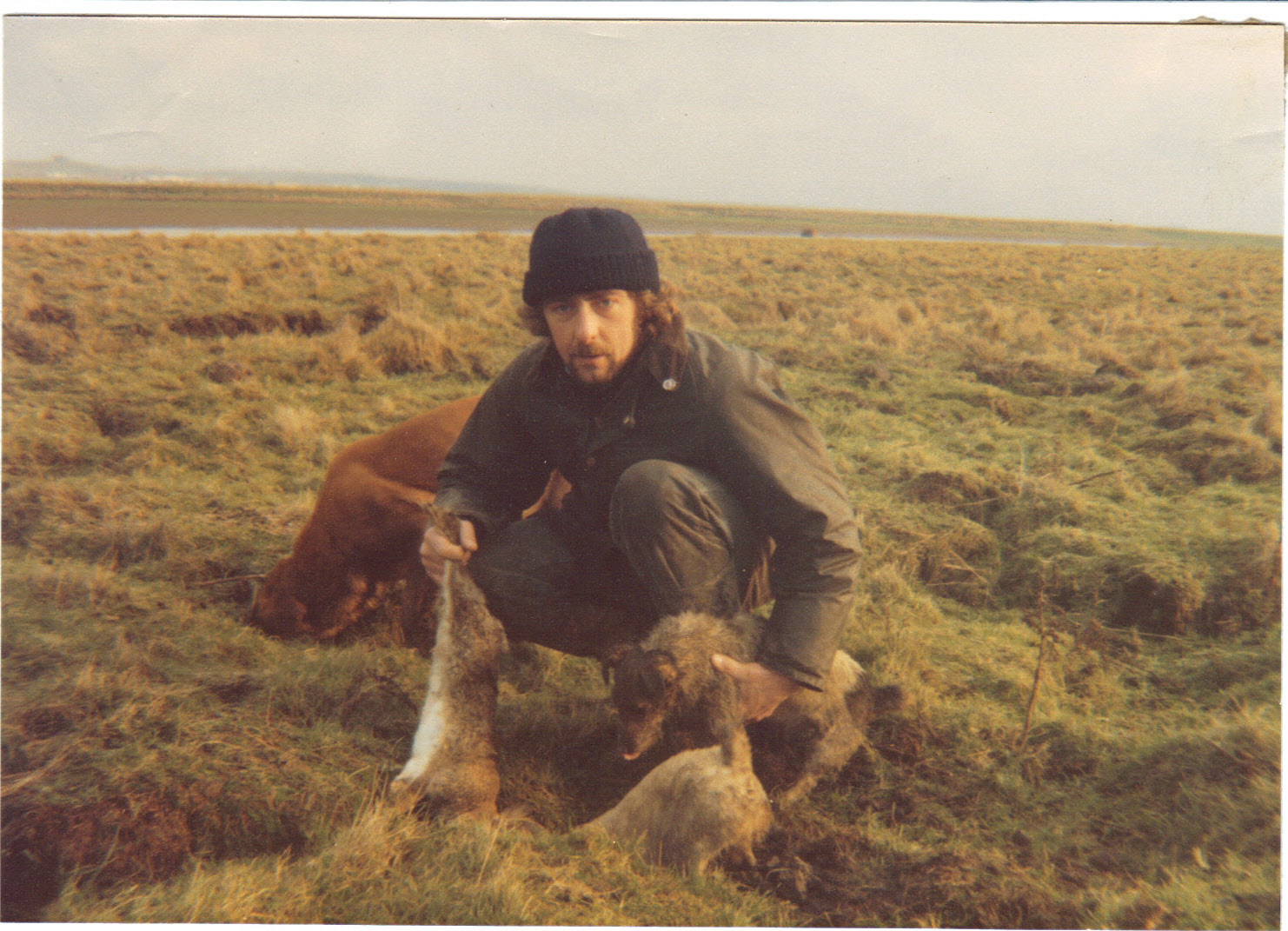
What seems like a lifetime ago, which I suppose it is if you're only 33, four of us used to regularly fish in Windmill Creek for eels on hot and sunny, summer Sunday mornings. Each week we used to split into two pairs and have a light-hearted competition to see which pair could catch the most eels. The "prize" was an imitation cup that we had fashioned out of the tin foil that our sarnies were wrapped in. The rods were nothing special, just cheap "junior" fishing rods, mine for instance was bought in Woolworths and I still have it. The bait was always simple garden worms, although sometimes we would employ "secret" methods such as dipping the worms in sardine oil, it probably made no difference but we had fun trying to devise these new aides. The big difference between then and now was the fact that you caught eels almost as soon as the worm sunk to the bottom of the Creek, nowadays you can sometimes wait hours just to catch one.
It was such great fun and on hot mornings like the one below it was sheer bliss being somewhere so remote and picturesque. Elmley RSPB was still in the early stages of being created then and so the Spitend marshes alongside the Creek still looked pretty much as they had for a few hundred years. Windmill Creek was pretty much the same, despite being dammed off after the damaging 1953 floods. The old saltings along the Elmley side of it were wide in places and overgrown and ungrazed, fissured by old reelways and honeycombed by hundreds of rabbit holes - rabbits were counted in huge numbers in those days.
I'm afraid the quality of these photos is poor as they were taken in 1977 and they certainly don't show how hot it was that morning. DOUBLE CLICK ON THEM TO BRING THEM UP IN BETTER DETAIL.
The top photo shows me as a slim and youthful version of my now aging self and the second is two of my friends looking amused at the "bootlace" eel that one has just caught


To get there we drove up the Elmley track and through Kingshill farm with its old barns and farm cottages. The farmhouse itself, which had been home not long before to the large Gransden family, was at the time newly occupied by Peter Makepeace the first RSPB manager and sometimes we'd stop for a chat and a cup of tea. After that it was down the slope the other side and across the Newlands track towards Wellmarsh. I wonder how many people visiting these days realise that the track that they follow between Kingshill and Wellmarsh is on top of one of the original anti-flooding bunds, pretty much the same as the Harty Road. The piece of marsh between the track and the seawall there has always been called Newlands and I imagine that it's a pretty fair bet that it was a result of the new piece of marsh that was created when the seawall was eventually built. Its also probable that the bunded track was once the original seawall.
From there we would arrive at Well Barn, or at least the ruins of it, and pretty much all it was in those days were some open-sided cattle stalls. I don't think any of it is still there now.
From there it was over the hump created by the counterwall that ran off of the seawall and runs behind the Wellmarsh Hide these days, past the fledgling Flood and past Cod's House, the derelict two-storey old farmhouse. Imagine living there in the old days, in weather like we've recently had - so remote and exposed, it just doesn't bear thinking about. From there it was the last stretch across Spitend to park at the base of the Dam and walk along the beautiful Windmill Creek.
It was such a privilage to be able to drive out there as we wanted too in those days and to wander all over such a wild and remote area and I miss it enormously. In fact I've only been back to Spitend a couple of times since then.

In the winter, we made just as many visits but this time in order to catch rabbits, a vital service at the time. The photo below shows me on top of the Windmill Creek seawall pulling a rabbit from a hole, the ball of mud in my left hand is my very first Jack Russell, Jessie.
This wasn't however the only way that we caught rabbits out there, sometimes the four of us would walk line-abreast across the rough Spitend grassland looking for rabbits "sitting out". Rabbits wiil spend part of their day sitting out in long grass in "seats" that they form in tufts of grass and as well as being surprisingly hard to see, if they think that you haven't seen them they will sit tight until you have passed them by.
However, being used to the marsh we became quite experienced at picking out a likely "seat" and as we walked past it would suddenly swipe downwards with a stick that we carried, mine was an old hockey stick and the rabbit would roll over dead. It sounds brutal but I can assure you that it was an instant death and it was surprsing how many rabbits that we could catch by this method as we walked round on a Sunday morning, dreaming of the pint of beer that always followed in the pub at lunchtime. Even better these pints were often free, paid for by the sale of the rabbits.

Saturday, 15 January 2011

HUNTING HUMBUG

D'you know, every time that I think I've calmed down about the alleged Hunting Ban along comes somebody to wind me up over it again. This time it was Robin Page in the Weekend Telegraph, who until he got slung off of One Man and his Dog some years ago, used to write sensible articles about the countryside. Since then all he does is rant about green politics and generally hate anybody that doesn't agree with his vision of the countryside.
Today, he was siding with the Hunts again and moaning about how stupid this continuing Ban is and how it is one reason for the increase of foxes everywhere. I get so wound up about this smoke screen that Huntsmen and their supporters put up about this alleged Ban and about how its not allowing them to go out, and how its threatening the existence of their packs of hounds, etc, etc. There is nothing to stop these people from enjoying charging about the countryside on their horses and with their hounds, all that's been stopped is their enjoyment at chasing a fox until its lungs give out, that's all. And if you live here on Sheppey its still possible to watch that occur because the Hunt, a few times each winter, still hunt in the traditional way, just as they always have.

Aided and abetted by the farmers whose land they hunt over, they turn up, unload their horses and hounds, unload the quad bikes with terrier men and terriers onboard and off they go after the first fox. Not only that, as is their traditional arrogant way, they also ignore the pleas of a few smaller properties out there to not go onto their land and do just that.

Now, I want to make it clear that I'm not against most pest control, which includes foxes, because as a hands on reserve worker I've seen the damage that foxes and the like can do to things like ground nesting birds colonies and have come to realise that simply "leaving things to nature" doesn't work. But what I do demand is that something should be killed as immediate and humanely as possible, not chased for a few miles for fun first. That's all the Hunts are about, killing for fun, controls are just a cover up.

Lets also consider how many foxes that a Hunt actually kill during one of these days out, probably 3-4 if they were really lucky, if they were really serious about their position as fox controllers they could probably kill far more, and more humanely and regularly, by going out at night with high-powered rifles and lights.

And lastly, one practise that used to go on in official hunting times and possibly still does is that of fox-earth protection. Yes, some hunts would actually safeguard some earths and their vixens in order to guarantee a supply of foxes for the following season's hunting and it has also been known for them to move fox cubs onto a barren estate. That fact somehow gets overlooked when they claim that a Ban prevents them from providing a fox control service in the countryside.

There is a lot of deceit being, and always has been, employed by the Hunts and those people that sit in their warm armchairs and smugly think that an alleged Ban is working, or that huntsmen deserve some sympathy, need to get out and look behind the smokescreen.